

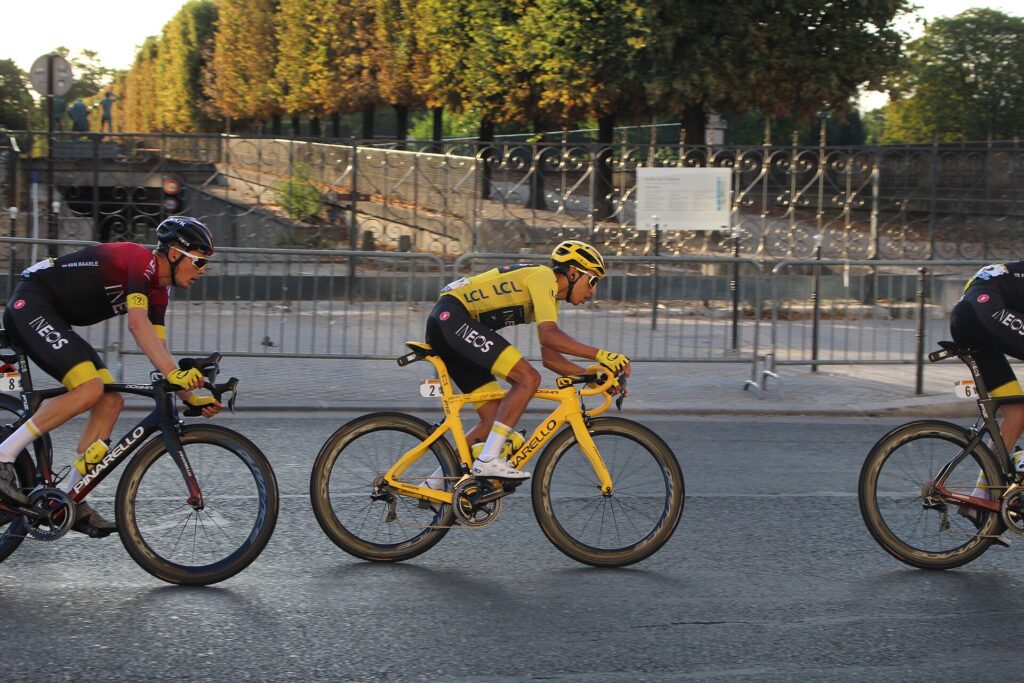
On July 28, 2019, Egan Bernal crossed the finish line on the Champs-Élysées as the youngest Tour de France winner in 110 years. He was 22. Born in Zipaquirá — a small city in the Colombian highlands north of Bogotá — he had spent his formative years climbing roads where the air is thin and the gradient doesn’t apologize. The cycling world had been watching Colombia for a decade. That afternoon in Paris, the conversation stopped being about potential.
But Bernal didn’t arrive at the Tour from nowhere. He came from a country where cycling isn’t a niche sport — it’s infrastructure, identity, and national mythology. This is what that looks like from the outside looking in: how Colombia built an entire generation of climbing champions, what the roads are like that produced them, and why serious cyclists from the US, Germany, and the UK are now booking trips to ride those same climbs.
How Colombia Produced the Best Climbers on Earth
Cycling arrived in Colombia in the early twentieth century and found exactly the terrain it needed. Three parallel cordilleras run the length of the country, creating a nearly unbroken supply of high-altitude climbing that no other nation replicates at this scale. Mountain passes above 3,000 meters are routine. The roads linking Andean towns were built for the geography, not around it — grades sustaining eight, ten, twelve percent over distances that would constitute an entire European mountain stage.
The Vuelta a Colombia, the country’s national stage race, has run since 1951. For most of its history it was contested by riders who had never raced in Europe and might never get there — but who had been climbing at altitude since childhood, developing a cardiovascular system built for sustained effort in thin air. The Andes don’t compromise. A cyclist who grows up training at these elevations, on grades that sustain for hours, develops a specific profile — one the European peloton noticed the moment Colombian riders started arriving on its biggest stages.
The first wave came in the 1980s. Lucho Herrera and Fabio Parra — riding for the Café de Colombia team, backed by the country’s coffee industry — arrived in Europe and redefined what climbers were capable of. In 1987, Herrera became the first Latin American to win a Grand Tour, taking the Vuelta a España. Parra finished on the Grand Tour podium and placed inside the top ten eight times across his career. They were known as los escarabajos — the beetles — for the way they vanished uphill while the European peloton watched. The nickname stuck. So did the template.
CC BY-SA 2.0,
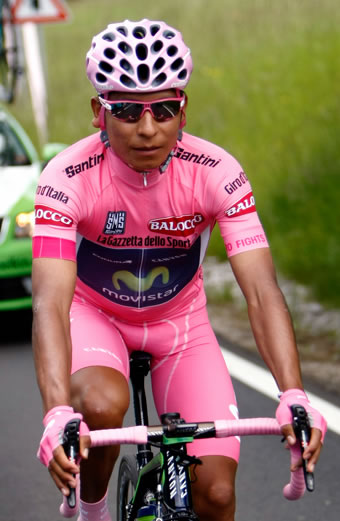
Nairo Quintana won the Giro d’Italia in 2014 and the Vuelta a España in 2016. Rigoberto Urán finished second at the Tour de France in 2017. Bernal won the Tour in 2019 and the Giro d’Italia in 2021. Three different riders, three different moments from the same Colombian generation. Behind each of them is a country whose roads, race culture, and altitude have been shaping world-class climbers for decades. Those roads are not closed circuits. They’re public roads. Anyone can ride them.
Among non-European nations, very few have placed riders on the Grand Tour podium across the history of the sport:
- 🇺🇸 United States: Greg LeMond — three Tour de France titles.
- 🇦🇺 Australia: Cadel Evans (Tour de France), Jai Hindley (Giro d’Italia), and podiums from Phil Anderson and Richie Porte.
- 🇪🇨 Ecuador: Richard Carapaz — winner of the 2019 Giro d’Italia and podium finisher at all three Grand Tours.
- 🇨🇴 Colombia: Grand Tour wins from Bernal, Quintana, and Herrera; podiums from Urán, Chaves, and Parra; and Santiago Botero — world time trial champion in 2002 and winner of the Tour de France mountains classification.
No other non-European country has produced this depth, sustained across four decades.
Want to ride the same climbs that shaped Colombian cycling? → Alto de Letras Challenge
The Roads Behind the Legends: What Cycling in Colombia Actually Looks Like
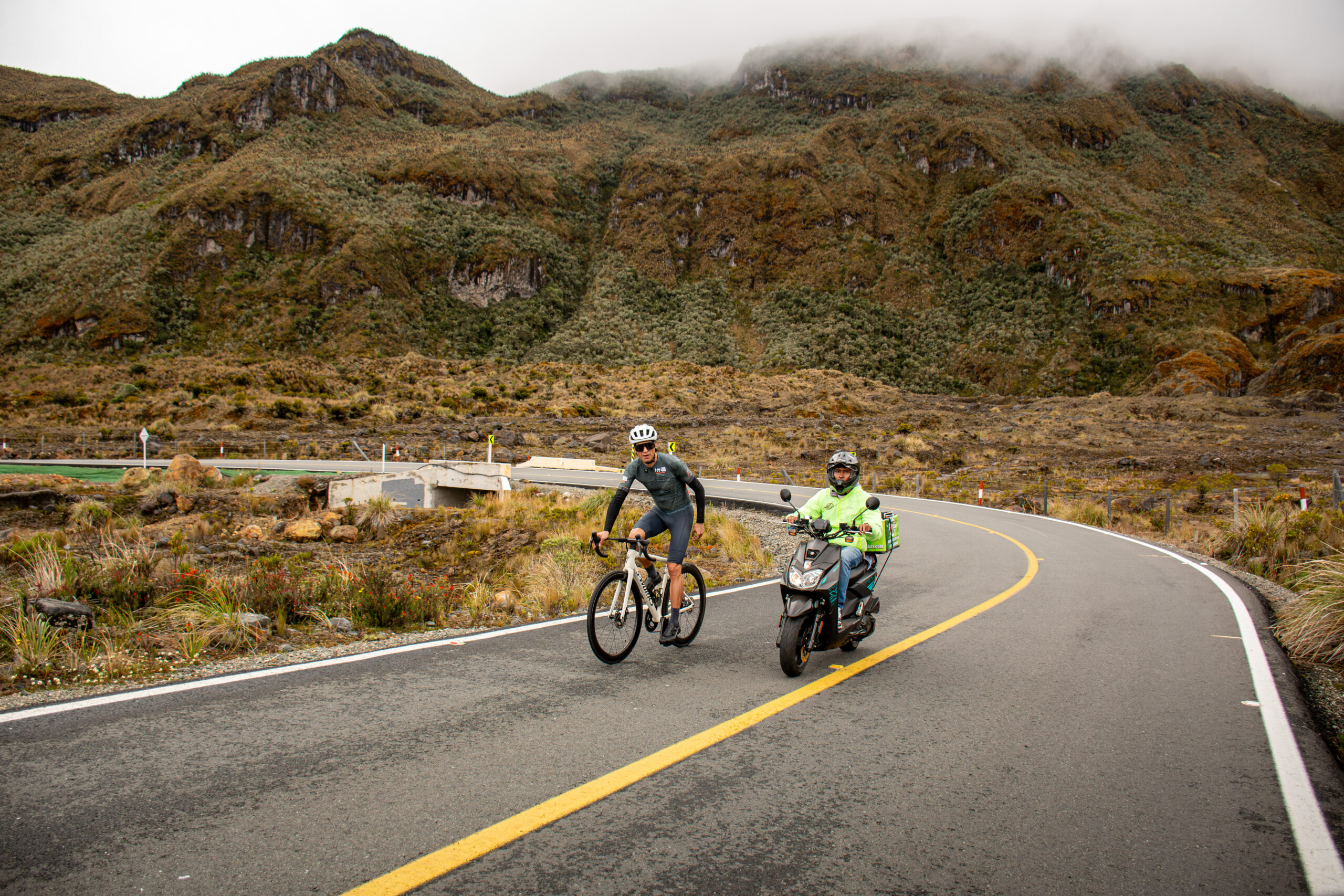
Egan Bernal trained on the mountains around Bogotá and Zipaquirá before joining Team Sky. Among those roads is Alto de Letras — 79.6 kilometers from the valley floor at Mariquita to the páramo at 3,500 meters, with 4,083 meters of total elevation gain and grades reaching 26.9 percent. It is the longest continuous paved climb in the world: a working road connecting two towns in the Magdalena valley. Colombian cyclists have been making this ascent for decades — not as a race, but as a personal measure of what they’re capable of, a rite of passage into “cyclist adulthood”.
The benchmark for Alto de Letras belongs to Santiago Botero — world time trial champion in 2002 — who rode the full ascent in 2 hours and 30 minutes. It remains the mark against which every serious attempt on this road is measured.
That specificity matters. VeloNews has named Alto de Letras among the defining climbs of the Americas — and yet almost no guided operator in the international market has built a week around it. The best climbing roads in Colombia are not manufactured attractions. They are working roads — part of the regional transport network — that happen to climb at gradients and durations that put them in a category with the Mortirolo, Angliru, and Zoncolan. The difference is that almost no amateur cyclists in the international market know they exist.
The riders who come to test these roads tend to leave with something they didn’t anticipate. Some of them spend their weekends on the long, flat roads of the American interior — Texas, the plains of the Midwest — where the metric is distance and elevation barely registers. On Alto de Letras, the data changes. Nine, ten, eleven percent sustained for kilometer after kilometer introduces a version of the climb, and a version of themselves on the bike, that the flat roads never showed.
When cyclists who ride Alto de Letras return home — back to their usual groups, their familiar routes — something has changed in them. They are now riders who completed one of the most demanding challenges in the cycling world. They have stories that go beyond the miles and the elevation their legs overcame.
Why Colombia Is the Next Big Destination for Serious Cyclists
The international visibility of Colombian cycling started building in earnest after Nairo Quintana finished second at the Tour de France in 2013. A decade of growing awareness followed — riders who knew Bernal’s name, who had watched Alto de Letras on YouTube, but had no guided product that matched the standard they expected from a trip of this scale. Beyond The Ride was built around that gap. Not to make the climbs easier, but to bring a premium, all-inclusive operation to roads that had never had one — the logistical standard a cyclist expects when they’ve flown in from Chicago or Frankfurt. Full vehicle support every day on the road. Bilingual guides with years on these specific climbs. Airport-to-airport, with nothing left to figure out on your own.
The Guardian has described Colombia’s cycling generation as the product of a culture where sport and geography collide in ways few other countries can match. That culture isn’t abstract. It shows up in how locals respond to cyclists on the road, in the communities built around the country’s biggest climbs, and in the infrastructure of regional races that continues to identify and develop riders who eventually make it to the international peloton.
For the international cyclist, this cultural depth is part of the proposition. A week riding the Colombian Andes isn’t just a week of hard climbing. It’s a week inside a country that has been shaping the best climbers in professional cycling for over a decade — and that still treats the sport with a seriousness the European destinations lost a generation ago. The riders who book now aren’t following a trend. They’re ahead of one.
Beyond The Ride’s guides have ridden the Colombian Andes for years — including Alto de Letras, the coffee region climbs, and the roads around Bogotá that Bernal and his generation grew up on. For a closer look at the climbing legacy behind this generation — Egan Bernal, Nairo Quintana, Rigoberto Urán, and the riders who came before them — see our post on Colombia’s greatest climbing legends on Instagram.
Ready to Ride the Roads That Built Egan Bernal?
Beyond The Ride’s Alto de Letras Challenge runs the full climb: 79.6 kilometers from Mariquita to the páramo, with full vehicle support on the road every kilometer, bilingual guides who have ascended this route dozens of times, airport-to-airport logistics, and accommodations chosen for the character of the region. Maximum eight cyclists per departure. No hidden fees.
Ready to ride? → Alto de Letras Challenge