

The Eje Cafetero is Colombia’s Coffee Region — and eje cafetero cycling means riding through a UNESCO World Heritage landscape on roads that the international cycling world has barely discovered. The region covers the departments of Caldas, Risaralda, and Quindío in the western and central Andes. Elevation ranges from around 1,400 meters in the coffee valleys to over 3,000 meters on the upper passes. A fully supported itinerary runs four riding days — including, on day three, the full ascent of Alto de Letras — covering more than 320 kilometers of Andean terrain.
The roads on the guided routes are in good condition, traffic on the secondary routes is manageable, and the infrastructure for international cyclists has grown considerably over the past five years. This is a complete guide to the Eje Cafetero from the saddle — what the routes look like, what the culture adds to every kilometer, when to go, and what to look for in the operator you choose.
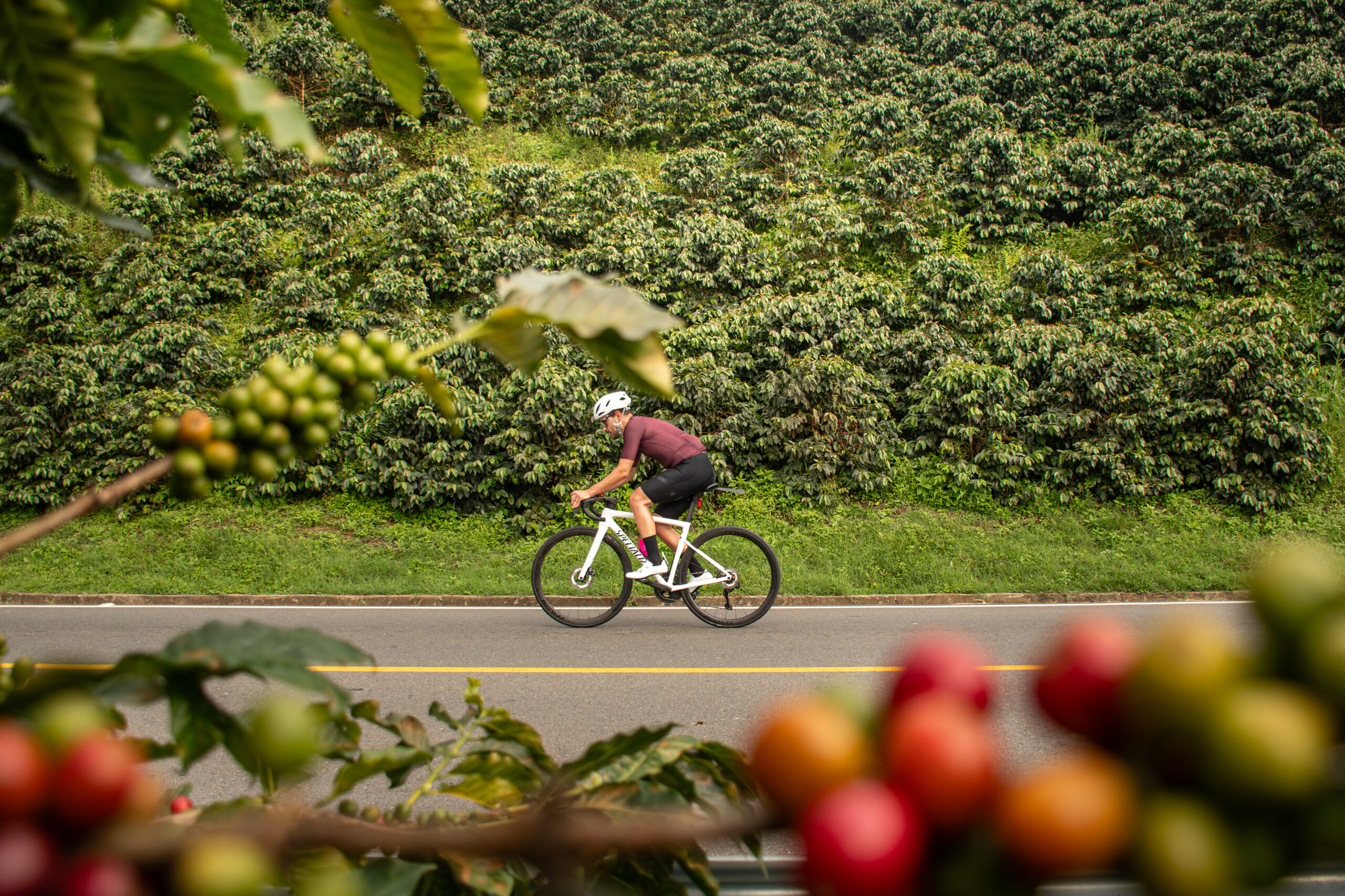
The Eje Cafetero Has the Best Cycling in Latin America
Alto de Letras has a file on every serious cyclist’s bucket list. The climb — 80 kilometers, more than 4,000 meters of gain, maximum grade approaching 27 percent — is one of the most documented ascents in the Americas. What almost no cyclist in the international market has ever found is a fully supported week of cycling built around that climb and the network of roads that surround it across the Eje Cafetero. The destination is known. The guided tour, inexistent. Until now.
The cultural and cyclist infrastructure is fully present. The international cycling market has not caught up. GearJunkie, after a firsthand bike tour through these same highlands, described the Coffee Region as “rapidly becoming a premier destination for adventurous cyclists” — and advised: “Get there quick before everyone else catches on.”
There is also a structural advantage that sets cycling coffee region Colombia apart from any climbing-only destination: the culture is not adjacent to the ride. It is built into the geography. The coffee farms, the colonial towns, the regional gastronomy — all of it sits within a few kilometers of the roads you will ride. A rest stop at a working hacienda is not a detour from the cycling. It is the cycling.
What Cycling Coffee Region Colombia Actually Looks Like: Routes, Climbs, and Daily Riding
Cycling coffee region Colombia means riding the foothills and mid-elevations of the central and western Andes over several days. The terrain does not flatten and does not relent. The Eje Cafetero is defined by its topography — you are consistently either climbing or descending, with occasional rolling valley stretches between. That is the character of the place, and it makes every day on the road a real day of riding.
The signature climbs of the region gain 1,000 to 1,500 meters of elevation over 25 to 35 kilometers, with gradients that sustain between six and nine percent — steady enough to require pacing, moderate enough to be finished. The profile rewards endurance over peak power, which is what makes the Eje Cafetero work for riders who want a week that delivers without destroying. E-bikes are available on the Land of Coffee itinerary for riders who want to control the effort without shortening the route or missing any section of the road.
The Land of Coffee itinerary covers four riding days across 320-plus kilometers of Andean terrain. The week opens with a easy to moderate descent from Alto de la Tribuna to Cambao — 76 kilometers, nearly 2,900 meters of dropping — that delivers riders into Mariquita, the gateway town at the foot of the Andes mountains. Day three is Alto de Letras in full: 79.6 kilometers from Mariquita to the páramo at 3,500 meters, with 4,083 meters of climbing and a maximum grade of 26.9 percent. To tackle this beast, cyclists enjoy some options: from skipping it altogether and joining the companions’ activities, to choosing a different starting point. The objective is to enjoy the trip, not to suffer from it. From that summit the itinerary moves to a premium lodge around the city of Pereira that serves as home base for the final two riding days. Day four is a loop through Quimbaya and Alcalá — 76 kilometers, 1,336 meters of climbing — and day five extends south through Filandia and Circasia on an 89-kilometer loop that passes through the wax palm valleys and the colonial streets of the coffee towns before returning to the lodge. The team vehicle stays on the road throughout all four stages.
The Culture That Makes Coffee Region Colombia Different from Every Other Ride
Eje cafetero Colombia is a UNESCO World Heritage Site. The Coffee Cultural Landscape of Colombia encompasses six farming landscapes and eighteen urban centers across Caldas, Risaralda, Quindío, and Valle del Cauca, designated in 2011 for its outstanding representation of a coffee-growing tradition that shaped the architecture, land use, and social fabric of the region over more than a century (UNESCO World Heritage Centre).
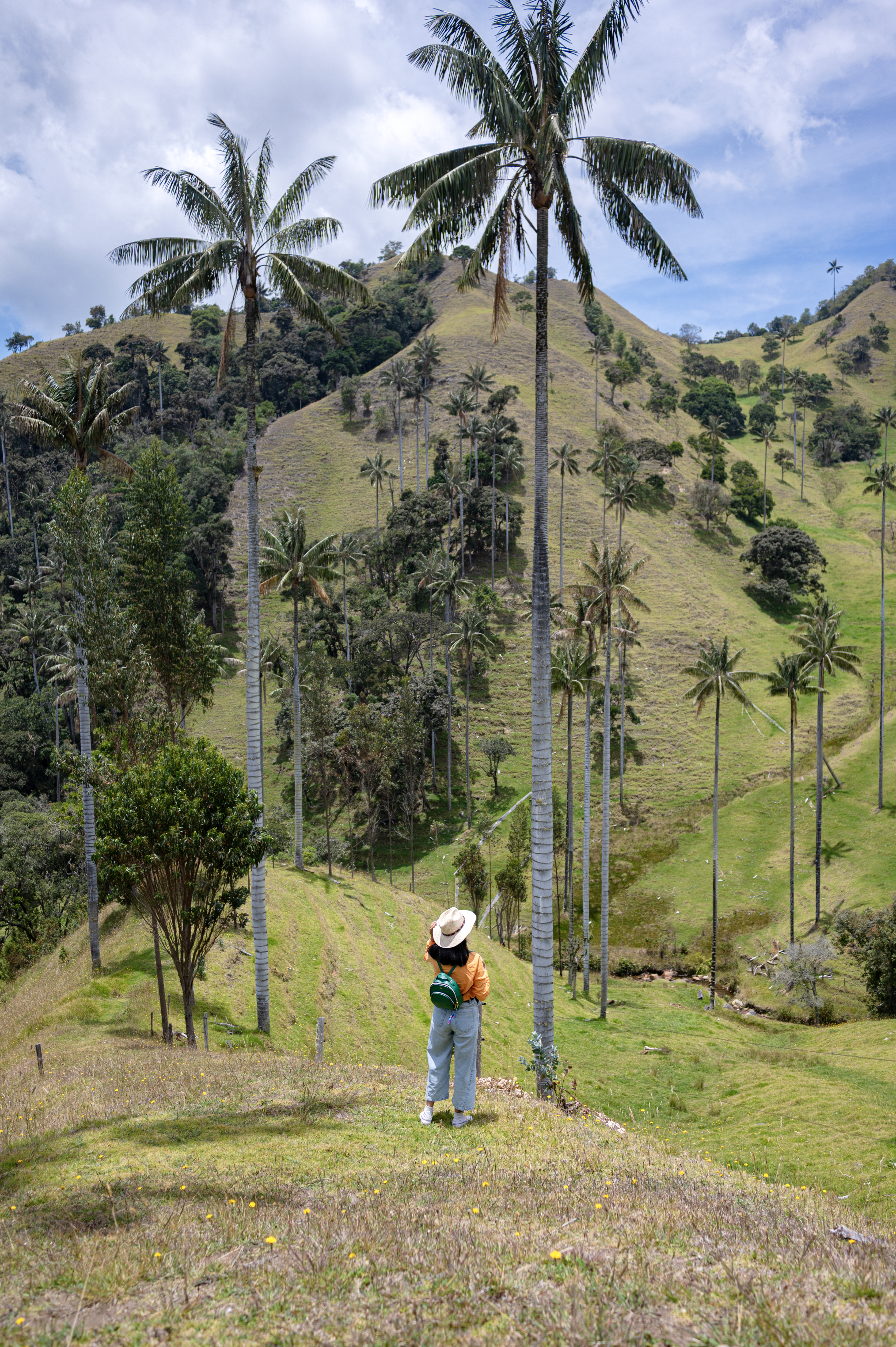
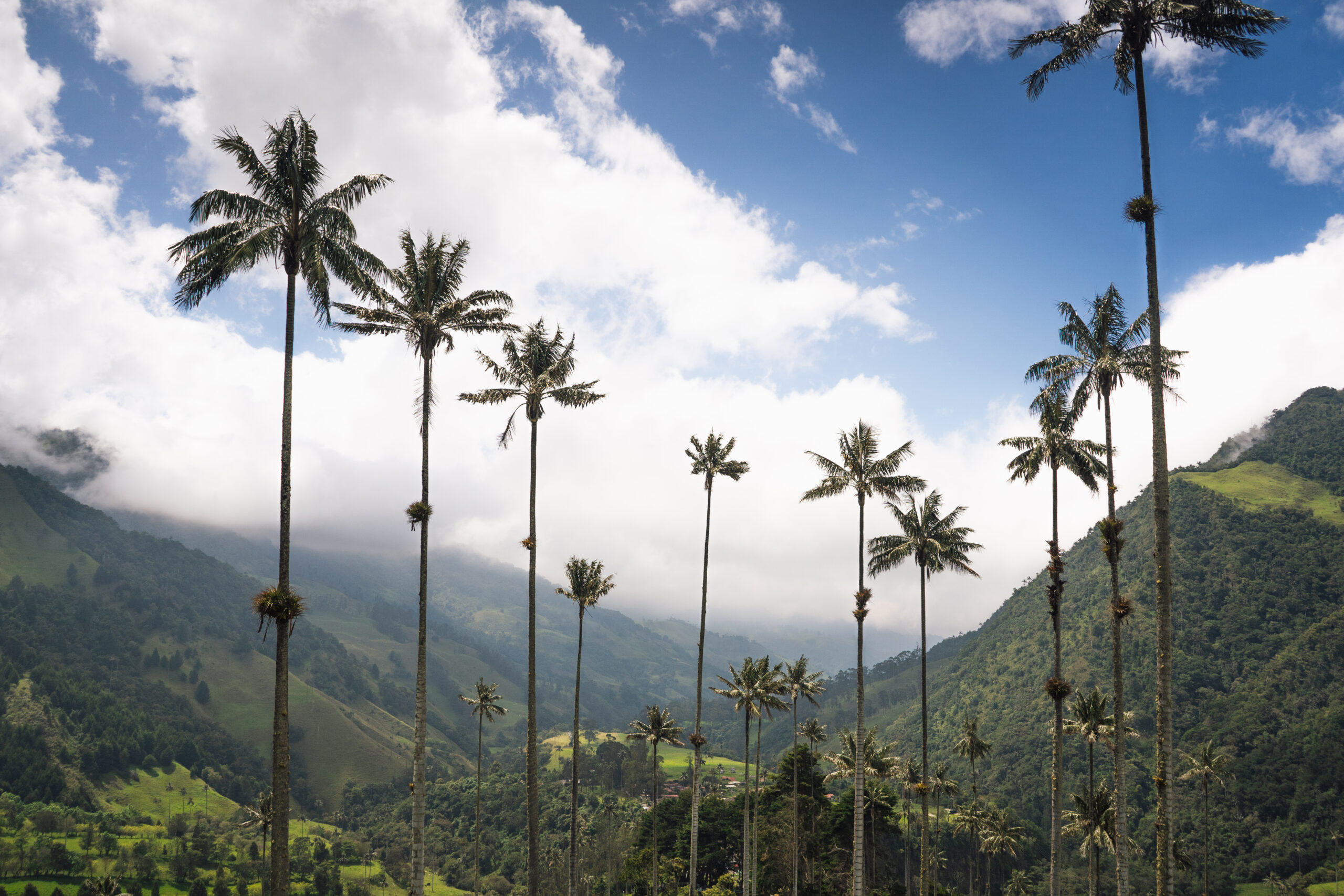
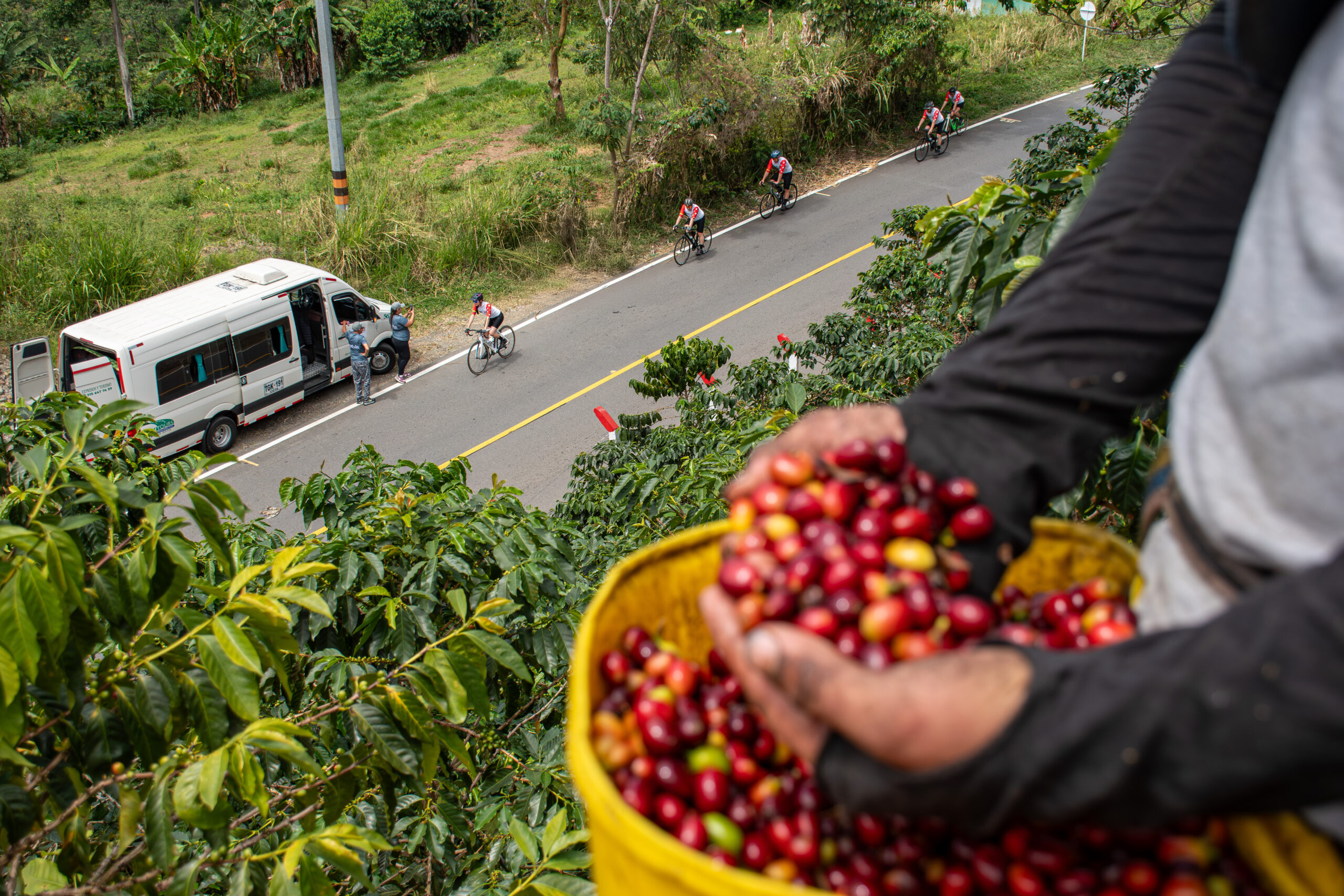
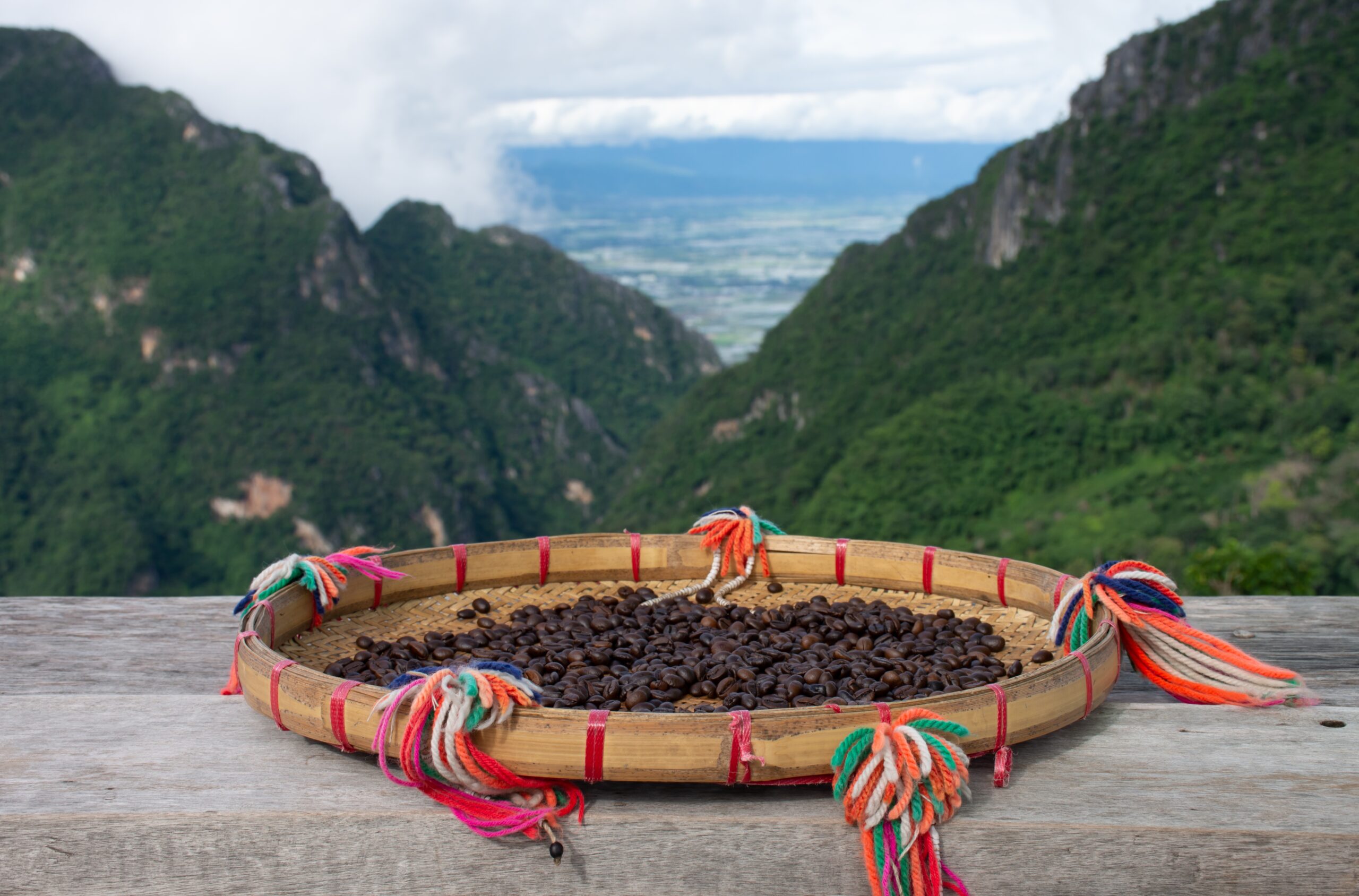
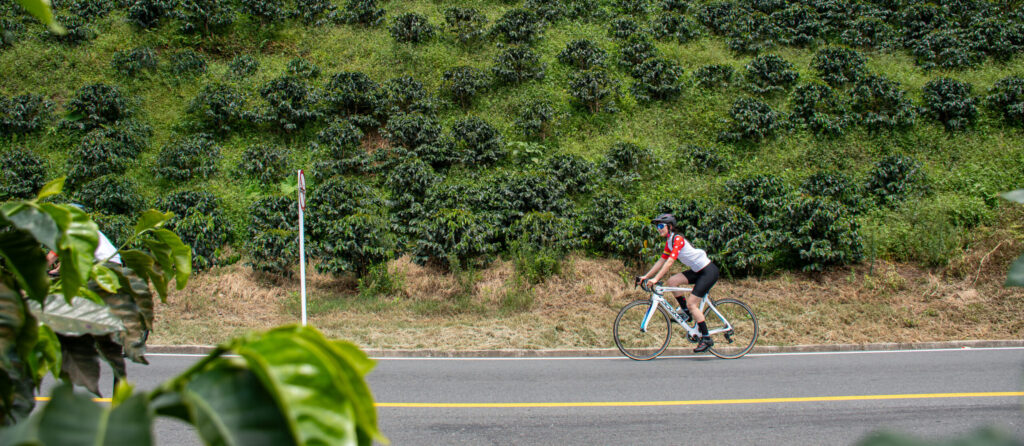
That designation translates into something specific on the road. The bahareque architecture of the coffee towns — a regional building technique combining bamboo, clay, and wood — is preserved in the façades of Salento, Filandia, and Marsella. The working haciendas where you trace the process from coffee cherry to finished cup — a tradition the Federación Nacional de Cafeteros has championed for over a century — sit a short distance from the climbs. The valleys of tall wax palms — Colombia’s national tree — rise from the floor of Cocora and come into view from the road before the descent.
For a rider whose travel has to earn its place alongside the cycling: rest days here are not wasted days. An afternoon in Salento or a morning at a finca does not pause the trip. It deepens it. The culture is built into the geography, which means every kilometer you ride is also a kilometer through one of the most visually and historically distinctive corners of Latin America.
If you are traveling with a non-cycling partner, the Eje Cafetero multiplies that advantage. The UNESCO-listed towns, the coffee haciendas, Valle del Cocora, the regional gastronomy — these are not destinations adapted for companions. They are destinations in their own right, with a full day’s agenda for a non-rider that does not depend on any cycling schedule.
Planning a fully supported week in the Eje Cafetero — rides, accommodation, transfers, and a companion program included? See Beyond The Ride's Land of Coffee →
When to Go and What to Expect: Practical Guide to Eje Cafetero Colombia
The Eje Cafetero has two dry seasons and two rainy seasons, shaped by its Andean position and the convergence of Pacific and Atlantic weather systems. The primary dry season runs from December through February. The secondary dry season covers from May until August. These are the most reliable windows for eje cafetero cycling, with consistent dry-road conditions and clear mountain views. Lonely Planet ranks the Zona Cafetera among Colombia’s essential destinations — and the dry-season riding conditions make it easy to see why.
The rainy seasons — March to May and September to November — are not a hard stop. Afternoon precipitation is common, but morning departures typically catch dry roads and better visibility. Guides with local experience plan daily start times around the typical precipitation window. Temperature at altitude ranges from roughly 14°C to 22°C in the coffee valleys, dropping to 8°C to 12°C on the upper passes. A light base layer and a windproof shell handles most conditions — the same kit that works on a cool morning in the Pyrenees works here.
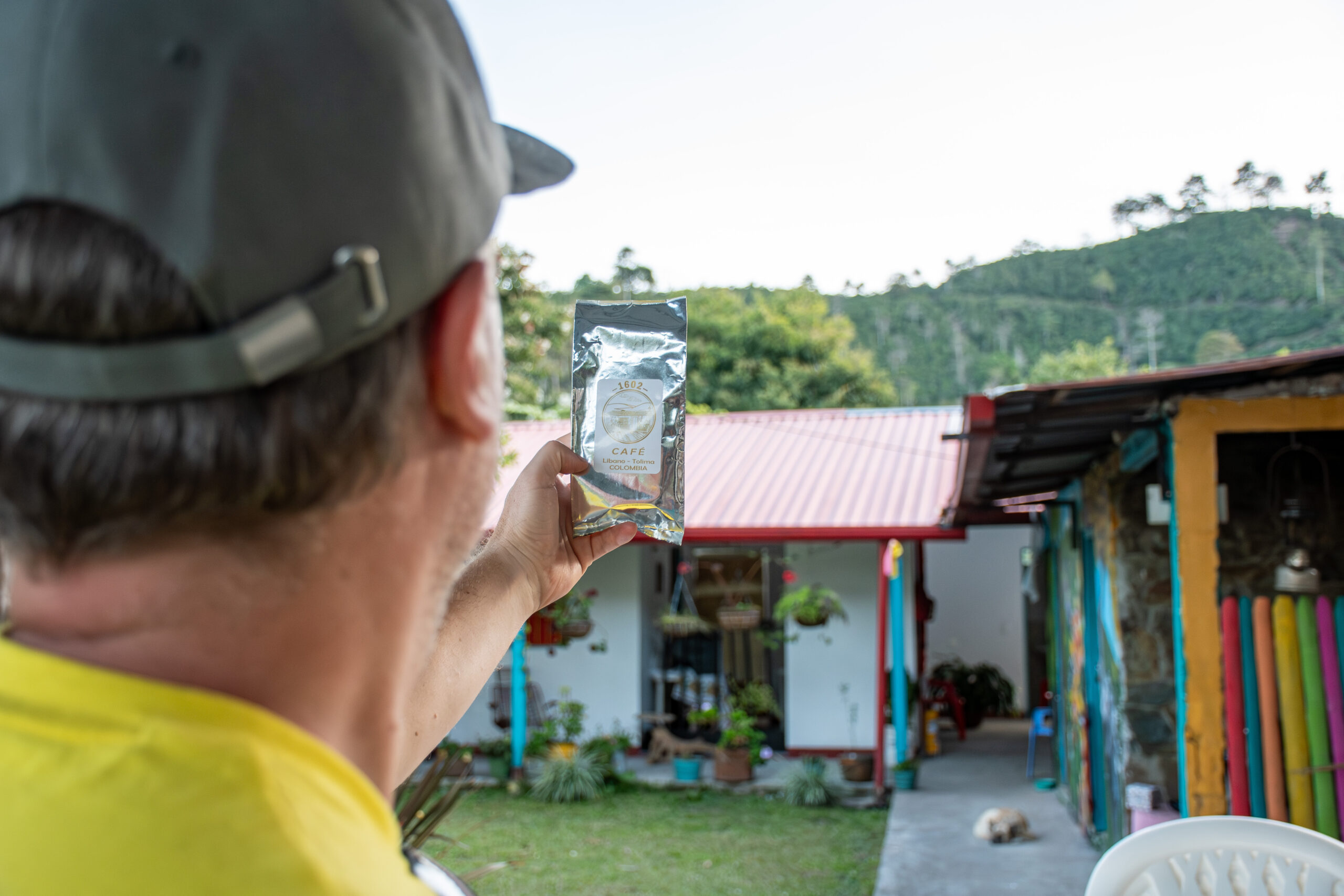
The gear handles the riding. What the week gives you beyond the saddle is harder to pack. The coffee experience is where cyclists and companions meet at the same table. While the riding days separate the two groups, the coffee farm visit brings the entire group back together — and delivers something neither itinerary can replicate on its own. At the Parque del Café and the working haciendas along the route, you trace the full arc of the process: cherry picking on the slopes, wet pulping, the fermentation tanks, the drying beds, and finally a cupping of the specific lots grown on that farm. By the end of that afternoon you have understood why the altitude and the volcanic soil produce the acidity profile in the cup, and tasted the difference between a washed and a natural process from the same harvest. What you take home from that table is not generic Colombian coffee from an airport shelf. It is a bag of the specific lot you cupped, from the specific farm you visited, on the specific week you rode the Eje Cafetero. That detail does not exist anywhere else. Neither do the artisan coffee products made and sold exclusively in the towns you pass through on the road. The cycling week ends. The coffee stays.
I bought a honey-process lot from the hacienda — the one from the cupping with the chocolate and dried cherry notes. And a chapolera doll for my daughter. She is five. When I got home she put the doll on her nightstand. I told her we’d come back when she was old enough to ride.
René Olaya — Land of Coffee, August 2025
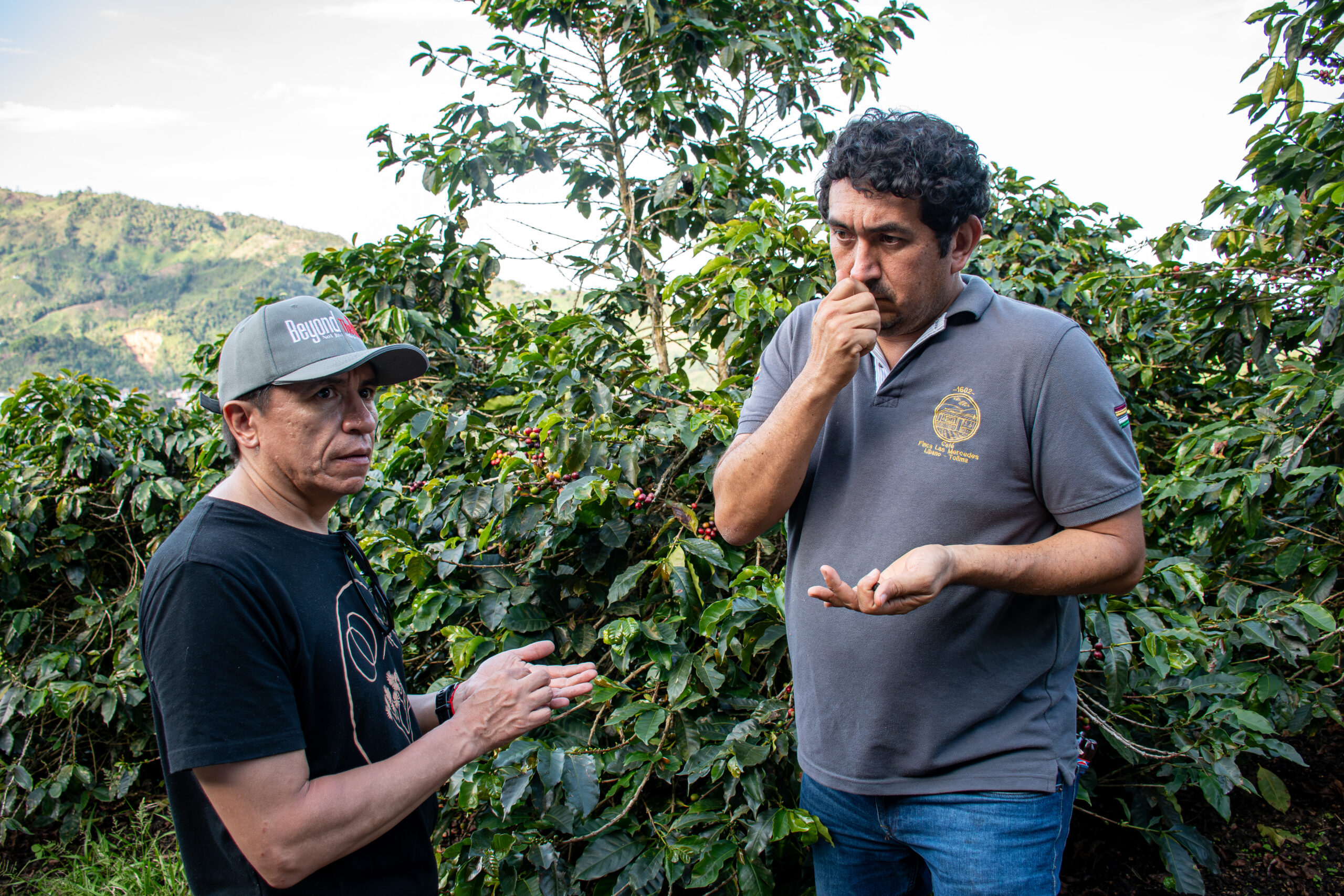
Beyond The Ride’s Land of Coffee runs the full week: climbs through the Eje Cafetero, accommodation in boutique lodges, airport-to-airport transfers, daily sport massage, and a companion program with its own dedicated guide if your travel partner doesn’t ride. Maximum eight cyclists per departure. Zero hidden fees.
Ready to ride the Eje Cafetero with full support? View Beyond The Ride’s Land of Coffee →