

Ask a cyclist which is harder — Alto de Letras or Alpe d’Huez — and the honest answer is that they aren’t measuring the same thing. Alpe d’Huez is 13.8 km of concentrated punishment: 21 hairpins, an 8.1% average gradient, over in under an hour for a strong rider. Alto de Letras is roughly 80 km with no descent, no flat section, and no reset button — a climb long enough that most riders spend four to six hours inside it, crossing four climate zones along the way. One is a sprint dressed up as a mountain stage. The other is closer to an entirely different sport.
Below is the full data comparison — distance, gradient, elevation gain, and what each climb actually feels like on the bike. We’ll also look at why Alpe d’Huez is getting extra attention in this year’s Tour de France, and at a harder question: why a country with a climb like Alto de Letras, 75 years of stage-race history, and a fan base to match still doesn’t have an event that puts it on the same stage as cycling’s biggest races.
Alto de Letras vs. Alpe d’Huez: The Numbers Side by Side
The two climbs get mentioned in the same sentence because both function as ultimate tests for road cyclists. The data shows they test completely different things.
Alpe d’Huez: 13.8 km, average gradient 8.1%, maximum gradient 13%, 1,071 m of elevation gain, 21 numbered hairpin bends, summit at 1,860 m. (Source: climbfinder.com)
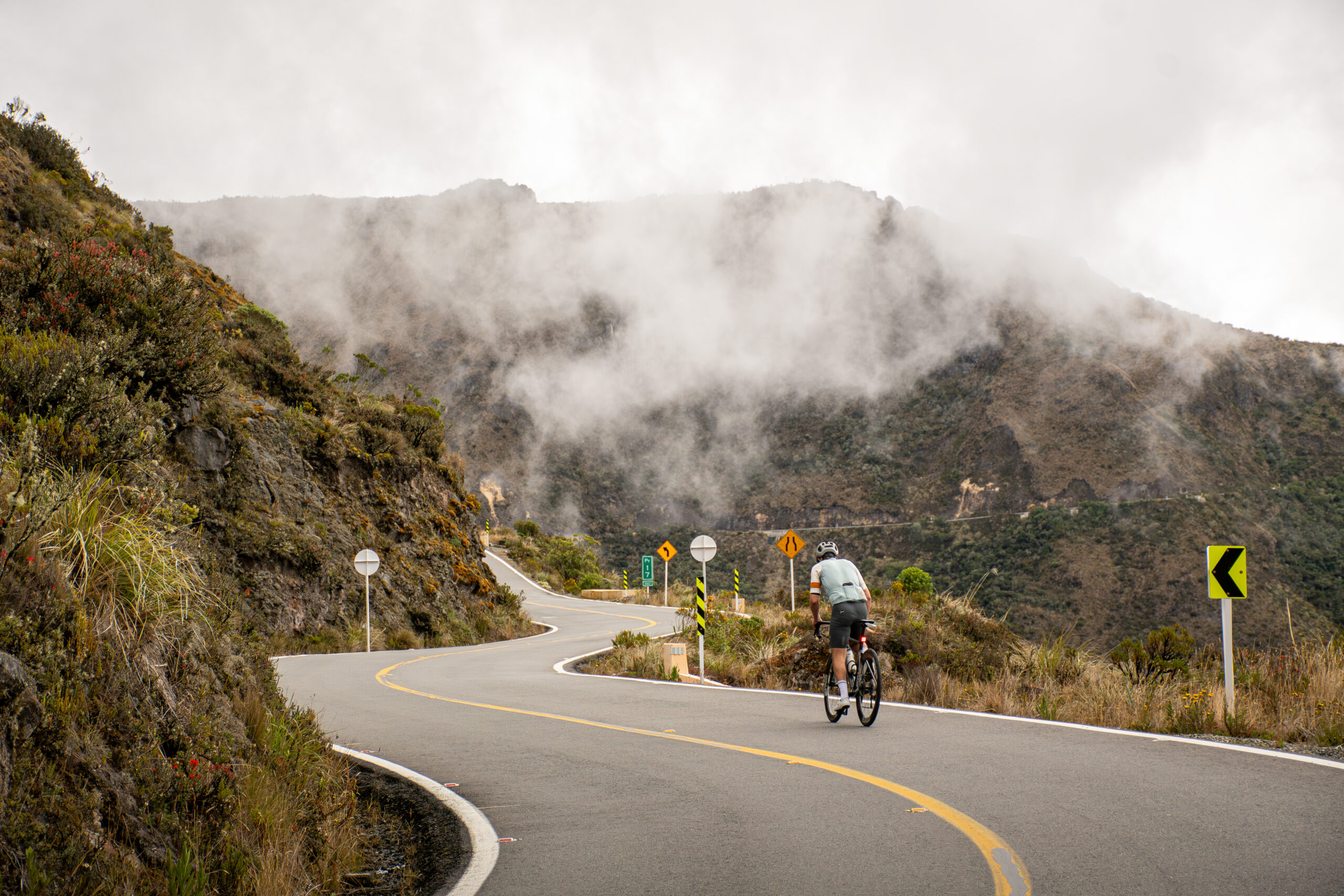
Alto de Letras: roughly 80 km of continuous ascent, average gradient 4% — though the lived experience sustains 6–9% for most of the route, with ramps past 10% near the top — approximately 3,195 m of elevation gain, from Mariquita at 468 m to the Páramo de Letras at 3,663 m. This is the ascent behind Beyond The Ride’s Alto de Letras Challenge. (Source: pjammcycling.com)
Do the math and Alto de Letras is nearly six times longer than Alpe d’Huez and gains almost three times the elevation — the equivalent of climbing Alpe d’Huez three times back to back, without a single meter of descent to recover on. Alpe d’Huez rewards raw power delivered over a short, violent effort. Alto de Letras rewards the rider who can hold output for hours while their body works through altitude, heat loss, and fatigue that never really stops compounding.
If those numbers move you more than they scare you, Beyond The Ride´s Alto de Letras Challenge is a fully guided, all-inclusive week built around this exact ascent, two different routes — support vehicle, bilingual guide, and every cost itemized upfront. No hidden fees, ever. → Alto de Letras Challenge
Alpe d’Huez in 2026: Why the Tour de France Keeps Coming Back
Alpe d’Huez isn’t just a famous climb — it’s a Tour de France institution, and this year it’s getting more attention than usual. The 2026 Tour de France, underway right now, sends the peloton up Alpe d’Huez twice: Stage 19 finishes there after 128 km out of Gap, and Stage 20 arrives the very next day after 170.9 km that include the Col du Galibier and the Col de la Sarenne. It’s the first time in Tour history the race has decided back-to-back stages on the same climb. (Source: Cyclingnews.com; alpedhuez.com)
Each of the 21 hairpins carries a plaque bearing the name of a past stage winner, from Fausto Coppi’s first ascent in 1952 to the modern era — a permanent leaderboard etched into the mountain itself. That kind of institutional weight takes decades of racing to build. It’s also exactly what a climb like Alto de Letras has never had the chance to accumulate — not because the climb isn’t worthy, but because no race of that caliber has ever been built around it. Which raises a question worth sitting with.
Why Alto de Letras Hits Different: Heat, Altitude, and Four Climate Zones in One Ride
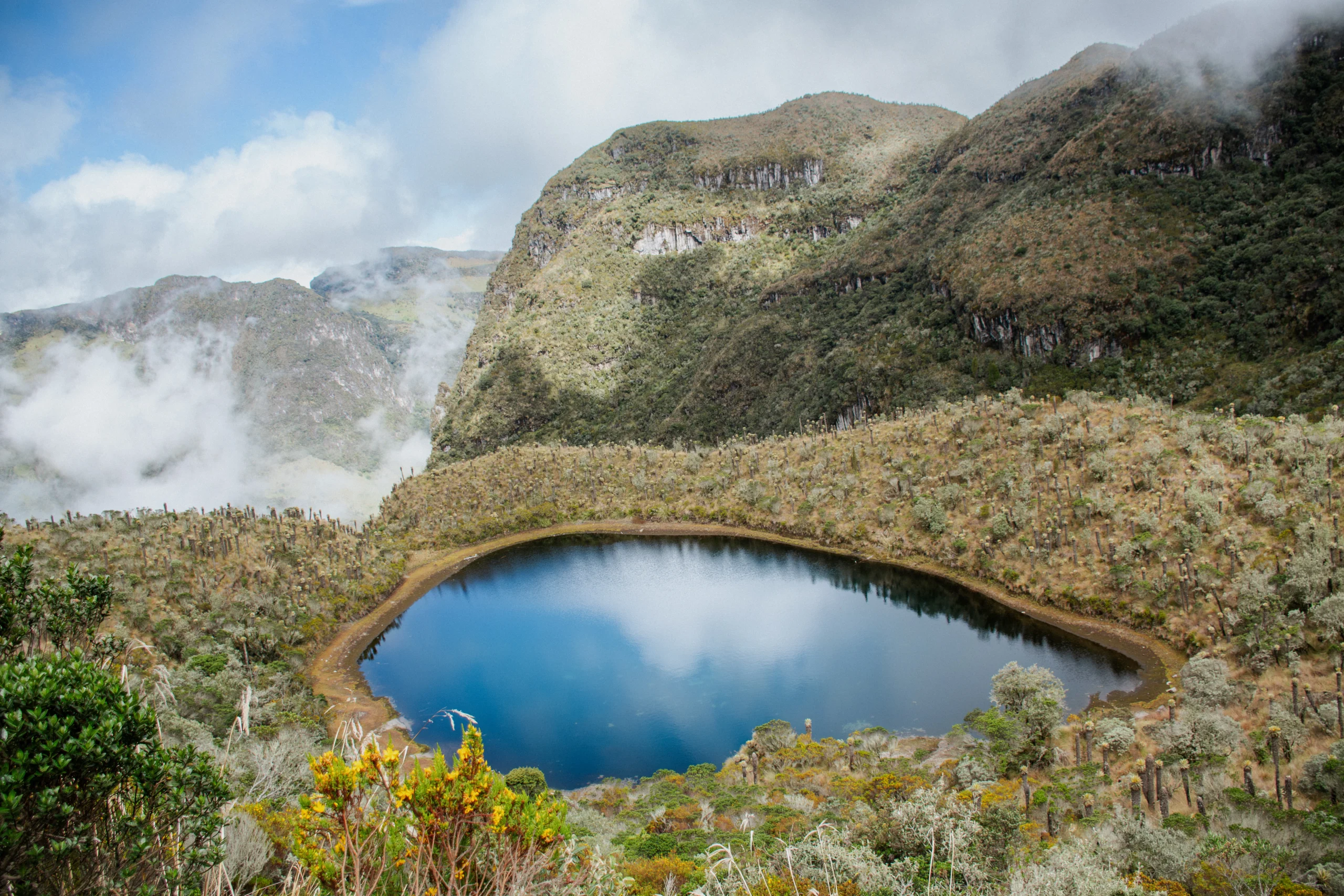
Riders who show up expecting a longer version of a European climb are usually surprised by kilometer 30. Alto de Letras starts in Mariquita’s tropical heat — 27–30°C, thick air, mango trees lining the road — and ends at a treeless, fog-wrapped páramo where temperatures drop to 4–10°C. That’s a 20–25°C swing inside a single ride, a range no Alpine or Pyrenean ascent comes close to producing. (Source: IDEAM)
In between, the route climbs through coffee farms, cloud forest, and high Andean scrub before the final approach to the summit. Riders lose oxygen as they gain altitude, lose heat as cloud cover rolls in, and never get a descent that would let their legs recover. This is what separates alto de letras cycling from even the hardest European climb: it isn’t one effort, it’s four different rides stacked on top of each other, each with its own physiology to manage. Fitness requirements, gear recommendations, and what a typical day looks like are covered in full in our FAQ.
Colombia Has Everything a World-Class Stage Race Needs — Except One Thing
This is the part that doesn’t show up on a gradient chart. Colombia has been running organized stage racing since 1951, when the Vuelta a Colombia became the oldest continuously run multi-stage race in Latin America. Cycling Weekly has described Colombian roadside culture as a place where cyclists aren’t a nuisance to traffic — they’re part of the national story, waved on by shopkeepers and children in towns the race passes through year after year. By most measures, cycling is Colombia’s national sport.
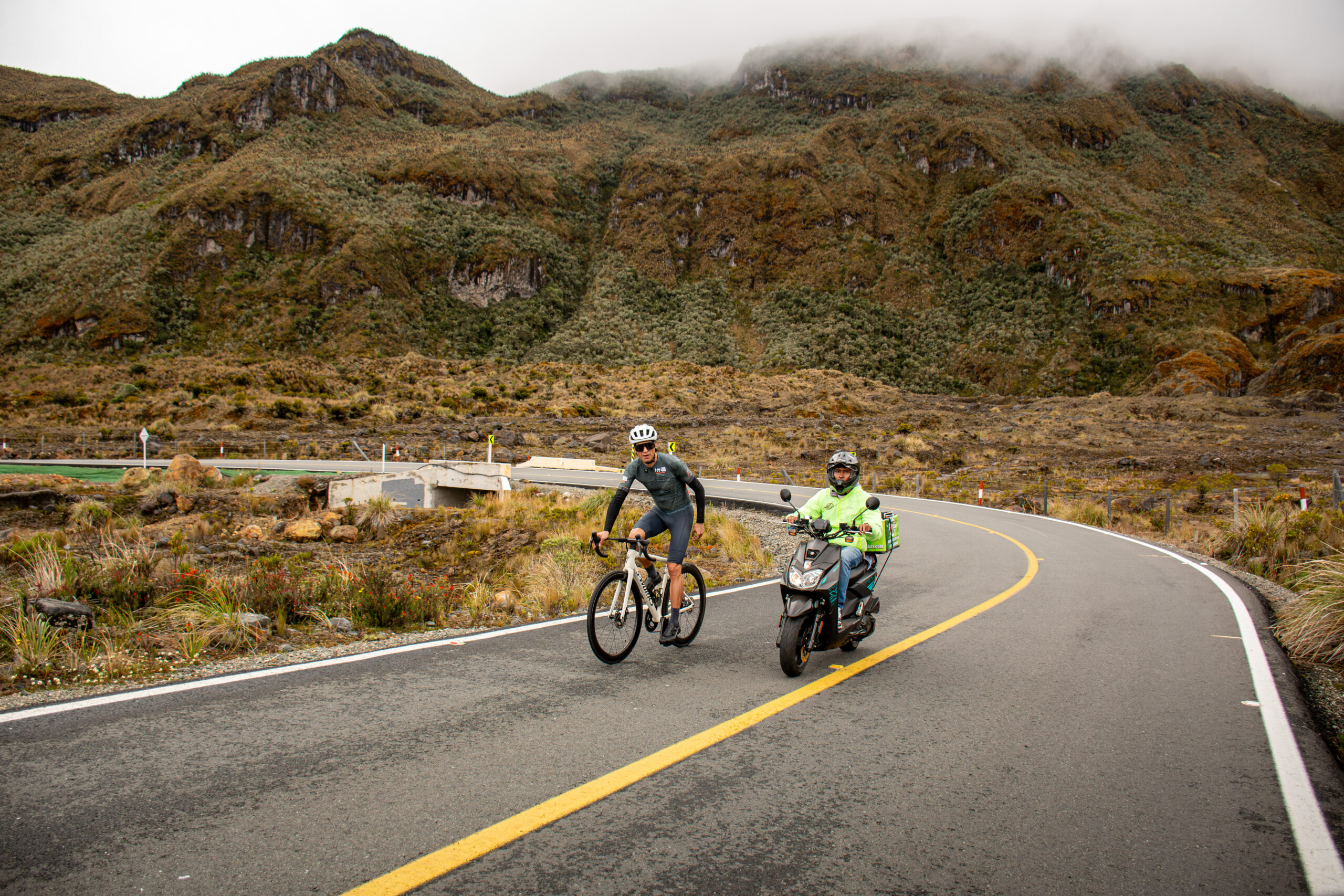
The roads exist — climbs like Alto de Letras that rival anything in the Grand Tours. The fans exist — a cycling culture 75 years deep, proven every year the Vuelta a Colombia runs without incident. The organizational and security experience exists — decades of running a national multi-stage race through mountain departments. What’s missing isn’t infrastructure, safety, or enthusiasm. It’s money. Tour Colombia, the country’s UCI-category showcase race and its best recent shot at competing on the same stage as cycling’s biggest events, was cancelled for 2026 after organizers said plainly that the roughly 10 billion pesos needed to run it at international standard simply wasn’t there. Not a safety concern. Not a logistics failure. A funding gap. (Source: Cyclingnews.com)
That’s the frustrating part for anyone who has actually ridden here: nearly everything a Grand Tour–caliber race needs is already standing on the side of the road, cheering.
“Beyond The Ride can be the domestique you’ve always wished you had on your rides — the rider whose only job is protecting your effort, kilometer after kilometer,” says David Giraldo, Beyond The Ride Brand Director, with 15 ascents of Alto de Letras. See what that kind of support actually looks like on the road, on our Instagram
Ready to Ride Alto de Letras?
You don’t have to pick a side in the Alto de Letras vs. Alpe d’Huez debate — most serious cyclists eventually want both. But if the numbers above have you thinking about the Colombian climb, the only real decision left is how you want to ride it.
Beyond The Ride’s Alto de Letras Challenge covers the full 80 km ascent, two different routes, with a support vehicle on the road at all times, a bilingual guide who has done this climb dozens of times, boutique accommodation, and airport-to-airport logistics — all priced upfront, with no hidden fees added later. Maximum 8 cyclists per departure, so this isn’t a crowd-managed itinerary.
Ready to ride? → Alto de Letras Challenge