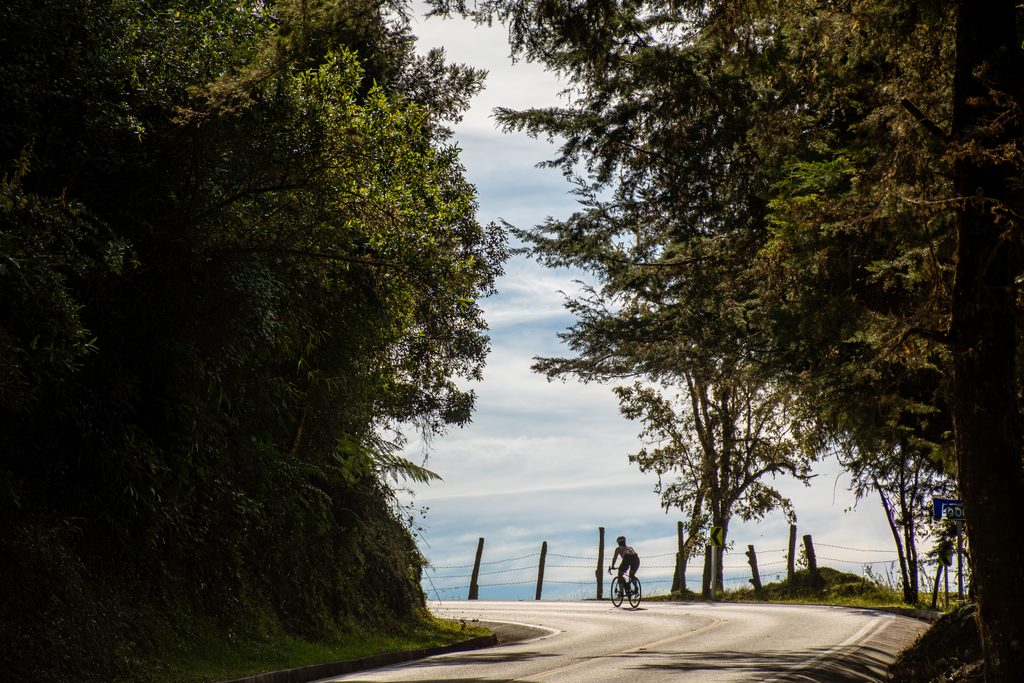
Colombia has quietly become the destination women cyclists ask for by name. Not because a marketing team decided it should be, but because the country delivers on the three things that matter most when a woman is choosing where to book a cycling trip on her own terms: infrastructure that removes the guesswork, terrain that delivers a real challenge without unnecessary risk, and a fast-growing lineup of women-only departures built specifically around how women actually want to travel. Add a cycling culture that treats riders as part of the national story rather than an inconvenience on the road, and the case for women-only cycling tours in Colombia makes itself. Spoiler: it’s not just the coffee.
In this article, we’ll look at how Beyond The Ride built two women-only itineraries around real questions women ask before they book — who’s coming with you, how hard it should feel, and what “all-inclusive” actually means — and why, logistically, Colombia keeps making this an easy country to say yes to. If you want the deeper dive on what it’s actually like to ride here as a woman — pace, safety, day-to-day logistics, all of it — we’ve published a full guide: Women Cycling in Colombia: What You Need to Know Before You Go.
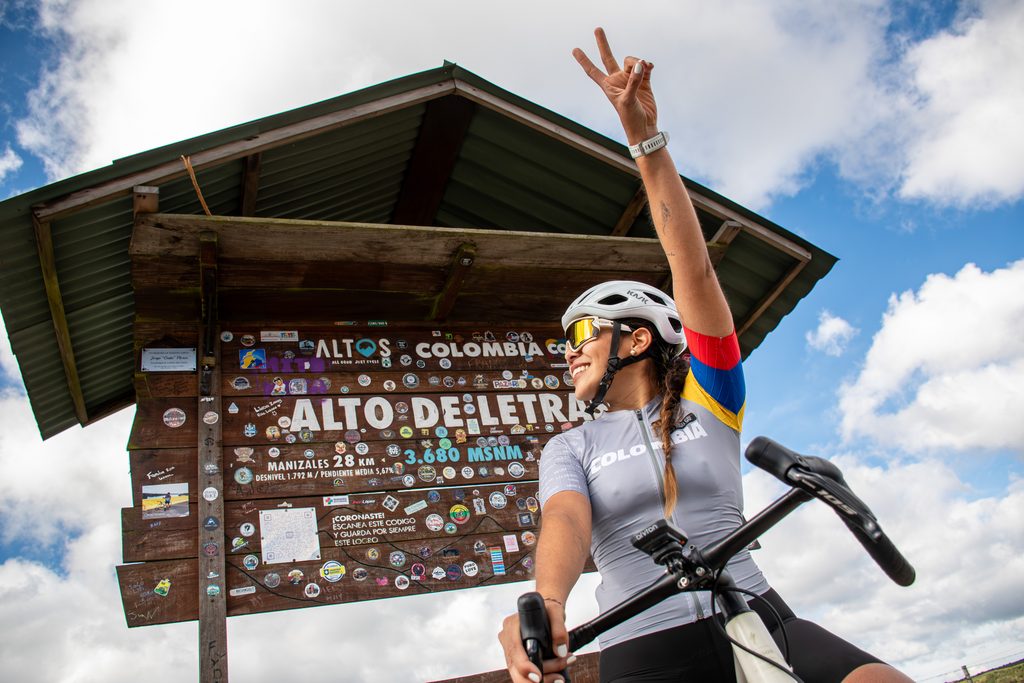
Never Alone, Never Crowded: Ride Solo, With a Friend, or With Someone Who Doesn’t Cycle
One of the biggest hesitations we hear from women considering a cycling trip abroad isn’t about the climbs — it’s about who’s coming. Some women want to ride solo and meet other cyclists along the way. Others want the reassurance of a familiar face at the dinner table, whether that’s a cycling friend or a partner who has never clipped into a pedal in their life.
Beyond The Ride built both women-only itineraries around that reality. Book solo, and you join a small departure of up to eight women cyclists, supported by a bilingual guide, a mechanic, a driver, and a recovery therapist for the full week. Bring a friend who rides, and you climb together. Bring someone who doesn’t ride at all, and they follow their own parallel itinerary during cycling days — coffee farms, local culture, the towns you’re riding through — and you reconnect every evening over dinner. Nobody has to choose between the trip they want and the company they need to feel secure taking it.
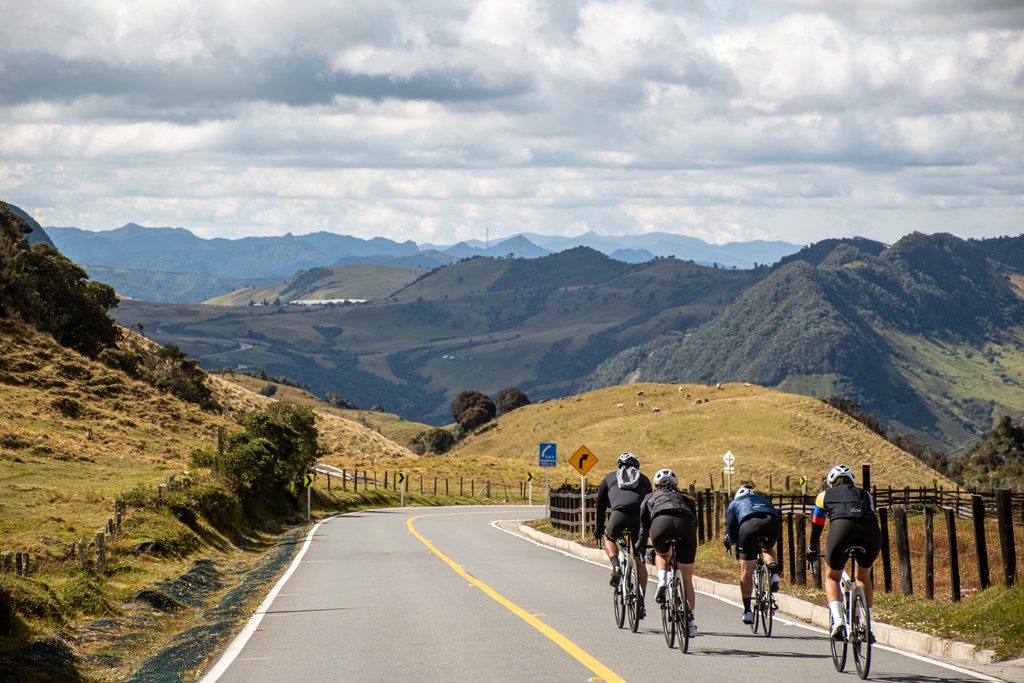
The Perfect Combination of Challenge, Culture, and Freedom on Two Wheels
Colombia isn’t a soft destination dressed up for a women’s tour — it’s one of the most respected cycling countries in the world, home to Tour de France and Giro d’Italia champions, and a place where cyclists are treated as part of the national identity rather than an inconvenience on the road, as Cycling Weekly put it in its own reporting from the region. And this isn’t only a men’s story: Mariana Pajón, Colombia’s two-time Olympic BMX gold medalist and one of the most decorated riders in the sport’s history, grew up training on these same roads. Colombia’s official tourism board has named the country a top cycling destination in its own right — a reputation earned through the terrain, backed up by a world champion.
That’s the freedom at the center of a women-only Colombia trip: real mountains, a real climbing culture, and the coffee region’s rolling roads through the UNESCO-recognized Coffee Cultural Landscape, all ridden at a pace you set for yourself. You’re not managing a group dynamic built around someone else’s fitness. You’re riding a country that takes cycling seriously, on terms built around you.
That’s exactly the terrain worth flying for — real mountains, real culture, ridden at your pace. It’s why Beyond The Ride runs two women-only itineraries in Colombia: the Alto de Letras Challenge for riders chasing a real summit, and The Land of Coffee for riders who want the climbing balanced with culture.
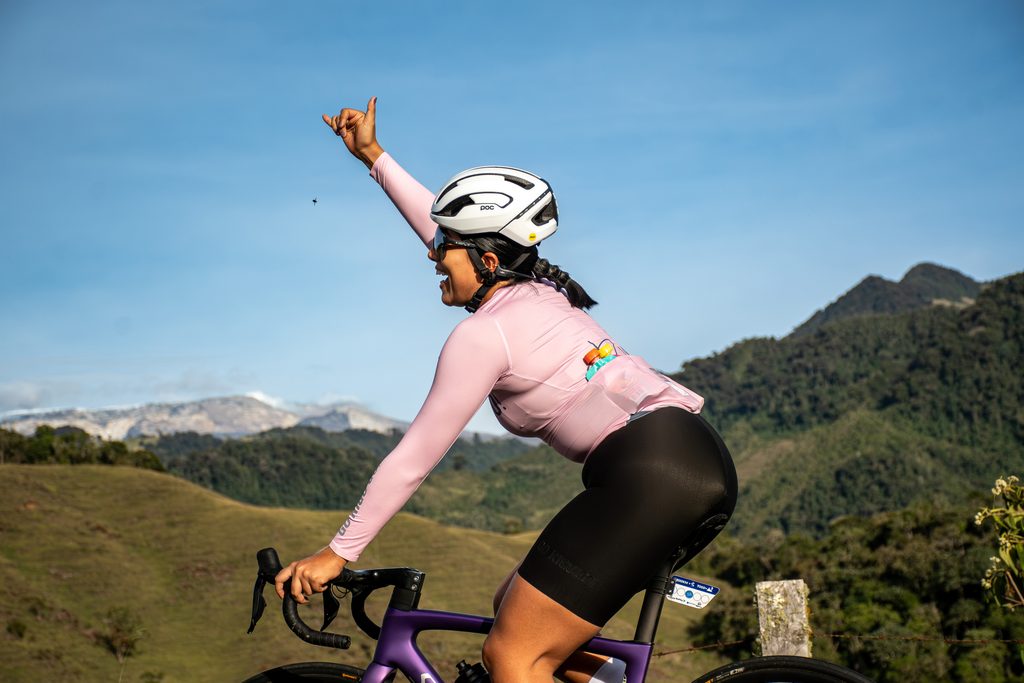
All-Inclusive, Designed by Her Needs — Not Adapted From His
Every detail of a Beyond The Ride women’s tour — the pace, the recovery time, the food, the accommodation — is priced and published as one all-inclusive rate before you book, and it was shaped by more than good intentions.
“Women who travel to ride abroad face a different set of questions than men do, and most of those questions never make it into a brochure,” says Luisa, Director of Operations at Beyond The Ride. “How safe is the road, really. Will the itinerary respect my pace, or quietly punish it if I’m not the fastest in the group. Will I be believed if I say I need more recovery time on day four. Those aren’t extra considerations we bolt onto a men’s itinerary — they’re the criteria we design the entire trip around, from the number of riders per departure to how our massage therapist plans the week.”
That difference is why the rate you see before booking is the rate you pay after: recovery therapy every day, every meal during cycling days, vetted accommodation, and full ground support, on a route where the fine print never works against you. If a friend or partner joins as a companion, their rate is published separately and is fully all-inclusive on its own terms — no guesswork, no surprise add-ons for either of you.
Stress-Free Logistics: The Practical Edge Behind Colombia’s Women’s Cycling Boom
Women’s cycling tours aren’t a niche anymore — the Adventure Travel Trade Association has tracked a marked rise in women driving adventure travel decisions, and National Geographic has called women-only travel one of the biggest shifts in how women move through the world. Colombia keeps showing up in that conversation, and it’s worth being honest about why: it’s not just the climbs or the coffee — we’ve covered that ground in our full guide — it’s that the country actually delivers on logistics, which is where a lot of first international cycling trips quietly fall apart.
Bogotá’s El Dorado International Airport became the first airport in the world to earn the OECD’s Blue Dot Certification, the global seal for sustainable, well-governed infrastructure — translation: shorter lines, better-run connections, and a smoother entry than most first-time visitors expect. No, you won’t need a prayer and a spare inner tube just to find your hotel. The World Travel & Tourism Council forecasts Central and South America’s travel sector to outpace global tourism growth in 2026, with Colombia named among the countries leading that expansion. None of this means Colombia rivals cycling infrastructure in the Netherlands or France — it doesn’t try to. It means that among Latin American cycling destinations, Colombia is, without question, ahead of the curve: paved climbs, reliable mobile coverage along the primary cycling corridors, and ground transport built to move you between cities, coffee farms, and trailheads without a single wasted afternoon.
Ready to Ride Colombia on Your Own Terms?
World-class mountains, coffee country landscapes, and a supportive community are waiting. You bring the passion. We handle everything else.

Ready to ride? →  Alto de Letras Women