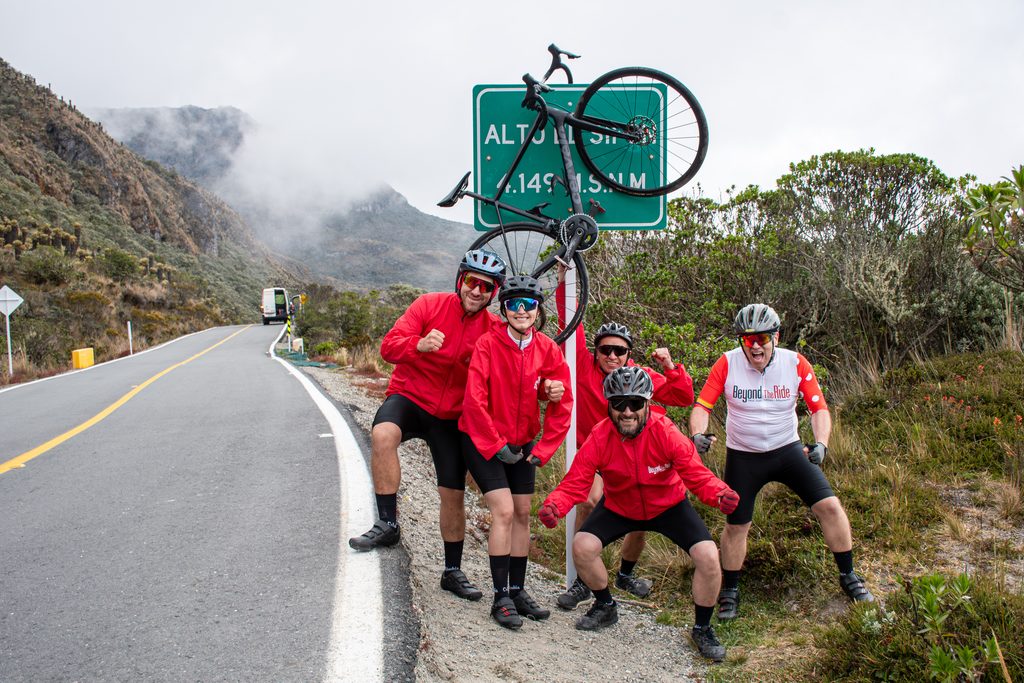
Every year, thousands of people gather at the foot of the Andes, in Mariquita, to take on the legendary Alto de Letras. Last year, nearly 4,000 cyclists faced the challenge, and not all of them completed it, for many different reasons. This year, on November 8, many of them will be back for another six to eight hours of fighting the mountain and fighting themselves.
But why do thousands of people gather for this challenge?
We could talk about any of the route’s technical data, but the sheer scale of the event speaks for itself. And if you’re only just starting to look into it, here’s our complete guide to Alto de Letras.
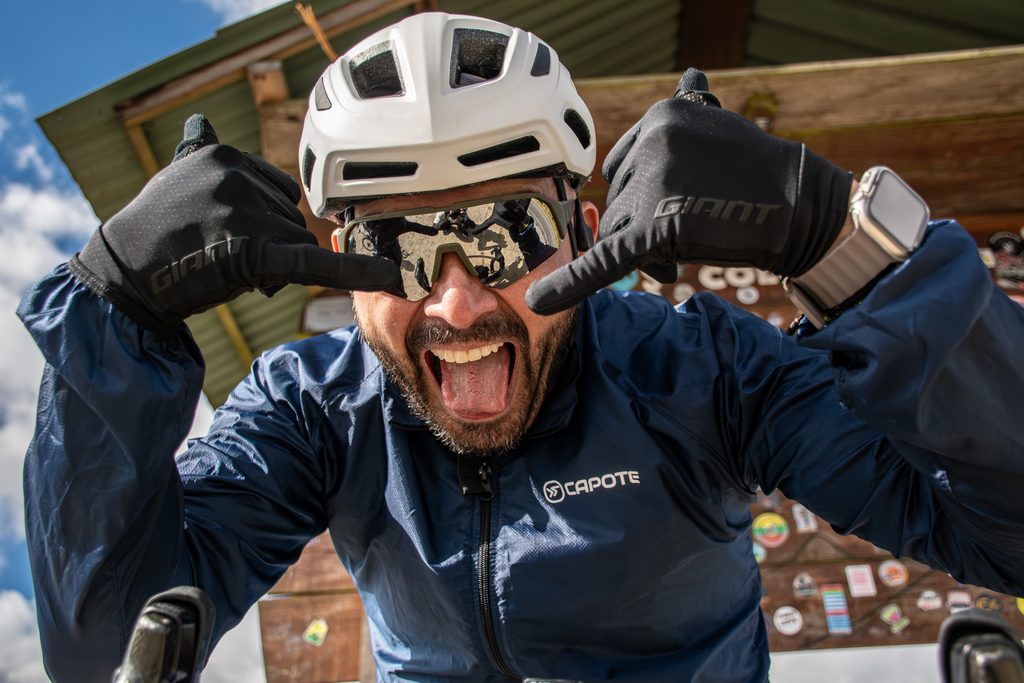
Again, Why Would 4,000 People Choose This Challenge in Colombia?
Because the numbers sound impossible, and that is precisely the point. Eighty kilometers, starting in the heat of the Magdalena valley and ending in the cold of the high Andes. The road runs through Fresno, Padua, Mesones, and Delgaditas, and the last stretch toward the top has ramps that steepen past 20 percent. Alpe d’Huez, the climb most European riders measure everything against, is 14 kilometers. Alto de Letras is almost six Alpe d’Huez lengths, stacked end to end.
People don’t come back because it’s easy. They come back because of what it does to them. Somewhere around the middle of the climb, the mind starts asking questions it never asks at sea level. What am I doing here? Why did I sign up for this? And then, kilometer after kilometer, the answer shows up on its own: because I wanted to know if I could.

The Cycling Tourist at 50
There are two ways to live this experience.
In the first, you see the challenge, you get excited, you plan, and a few months later you’re standing among thousands of riders just like you, climbing the longest paved climb in the world. Maybe you make it. Maybe you don’t. The only thing guaranteed is 80 kilometers of nonstop climbing.
In the second, you talk to us and simply book a service. You’re not carried away by the hype. You have your expectations, and maybe a few doubts. A few months later, you’re on the road with five other riders who share those same doubts, facing the legendary climb of the Andes.
In this version, it doesn’t matter if you get tired, because a support van is always right behind you. You don’t have to worry about the unexpected, because a domestique always has your back. It doesn’t matter if you give it everything, because a meal designed for your recovery and a massage are always waiting for you. All of it so that, in your fifties, you feel like a cyclist in his twenties at the peak of his career. Only here, it’s not about how fast you go. It’s about how comfortable you are and how good the experience is.
Same mountain. Two ways to live it.
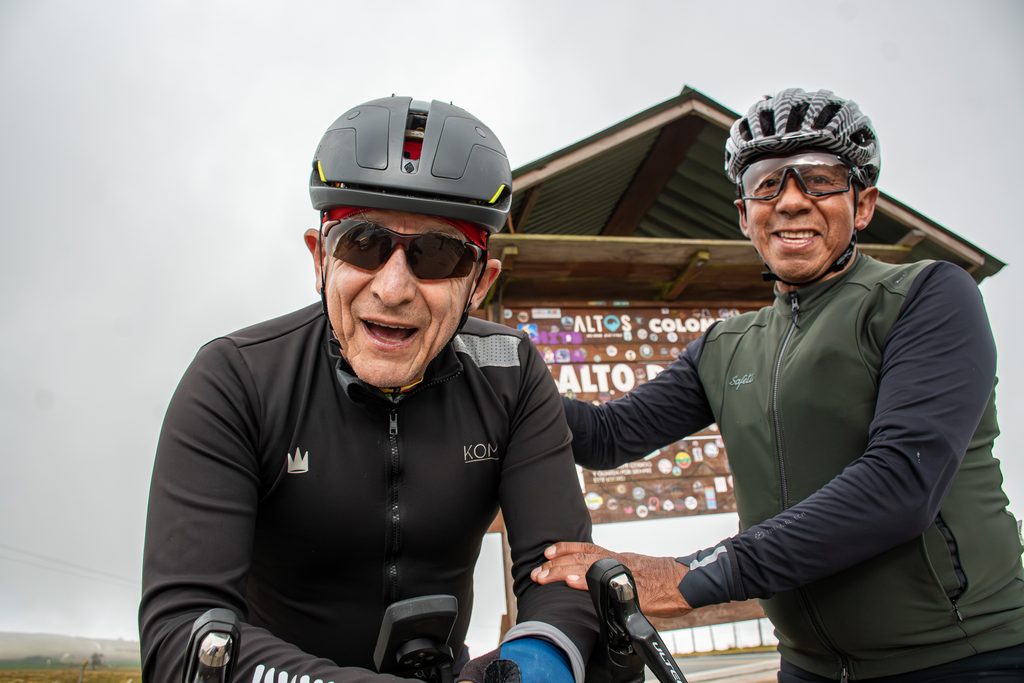
4,000 People Flew Home With a New Photo
Here’s the part we think about most.
On Monday, November 9, thousands of riders will be back in their cities and their countries. Back at their desks, in their kitchens, in their group chats. And each one of them will be carrying the same thing: a photo.
A photo at the Alto de Letras sign, wrapped in a jacket two sizes too thin for the wind, hair flattened by the helmet, legs shaking, face somewhere between exhaustion and disbelief. Maybe a photo at the start, still smiling, still clueless about what the next six hours will ask of them. Maybe one on the road with a friend they made at kilometer 50, a person whose name they’ll remember for years.
That image goes on a desk. On a phone lock screen. On a wall next to the bike. It gets shown to friends who ask “what’s that?” and answered with a story that takes twenty minutes and ends with “you have to go.” For the rest of their lives, whenever something feels too big, they will look at that picture and remember that they once rode up a mountain that scared them.
Four thousand people, four thousand photos, four thousand stories that start with the same sentence: “I did Alto de Letras.”
That is what they come for. Not the medal. The memory they carry home.
Ride Alto de Letras Before the Rest of the World Finds It
For years, Colombia was cycling’s best-kept secret. Climbs that rival Europe’s legends, quiet roads, and almost nobody outside the country who knew they were there.
That is changing, and fast. Colombia is now a safe place to ride, with the infrastructure, the lodging, and the services to welcome cyclists from all over the world. We talk about exactly this in one of our most-watched posts on Instagram, and it’s why we say this is the moment.
Right now, you can still meet this mountain as it has always been. Quiet roads. A páramo that feels like it belongs to you. But the crowds are coming, and when they arrive, every month will be high season.
Be one of the first, not one of the many. See for yourself on Instagram why the time to ride Colombia is now.
Ready to meet the mountain on your terms? → Ride the Alto de Letras Challenge with Beyond The Ride.